The Ultimate Women’s Tops Wardrobe Blueprint: A Professional Guide to Fit, Fabric, Color, Layering, Styling and Smart Fashion Investment
The Ultimate Women's Tops Wardrobe Blueprint: Fit, Fabric, Color, Layering, Styling and Smart Fashion Investment
1. The Strategic Role of Women's Tops
Women's tops form one of the most important categories in a contemporary wardrobe because they connect comfort, personal style and practical dressing. Unlike highly specialized garments, tops can be worn repeatedly across different settings and can change character depending on the trousers, skirt, jacket, footwear and accessories used with them.
A professional wardrobe strategy therefore treats tops as building blocks rather than isolated fashion purchases. A simple cotton T-shirt may become a relaxed weekend garment, a polished office layer or a travel essential. A blouse can move from professional dressing to an evening outfit, while a long-sleeve basic can support an entire seasonal layering system.
The objective is not to collect every possible style. The objective is to develop a balanced selection in which each garment performs a clear function while coordinating naturally with the rest of the wardrobe.
2. Defining a High-Performance Tops Collection
A high-performance collection of women's tops should provide several levels of dressing. Everyday basics cover routine activities, textured tops add visual interest, long-sleeve styles provide seasonal flexibility and refined blouses support professional or social occasions.
The most efficient collections also maintain a consistent color direction. When colors are intentionally selected, fewer garments can produce more combinations. This creates a wardrobe that feels larger without requiring constant shopping.
Daily Foundations
Simple cotton and jersey tops provide dependable options for everyday outfits, errands, travel and relaxed social settings.
Layering Essentials
Long-sleeve and fitted tops create practical foundations beneath jackets, cardigans, coats and overshirts.
Elevated Pieces
Blouses, button-up designs and refined fabrics introduce polish for professional and evening styling.
3. Fabric Selection and Wardrobe Performance
Fabric is one of the most important elements to evaluate when selecting a top. It determines how a garment feels, how it moves, how it drapes, how it responds to washing and how it appears under different lighting.
Cotton is widely used for everyday tops because it can offer comfort and a familiar natural texture. Ribbed fabrics add elasticity and surface dimension. Woven materials can provide greater structure, while satin creates a smooth reflective finish that naturally appears more elevated.
The intended role of the garment should determine the fabric selection. A top designed for repeated casual wear may need easy care and durability, while a special-occasion blouse may justify more delicate maintenance because its role is different.
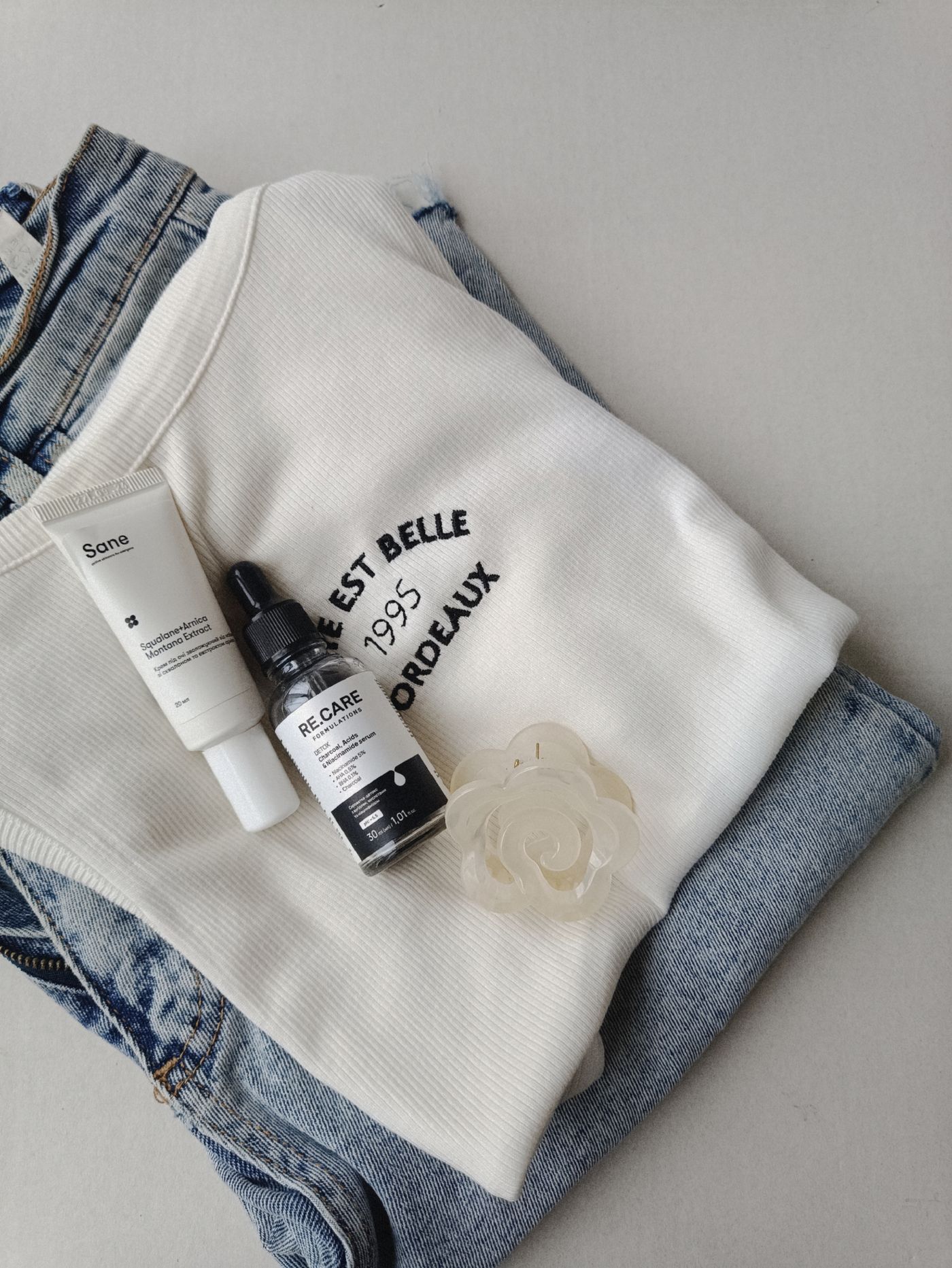
A clean, people-free fashion composition illustrating neutral clothing, denim and coordinated wardrobe essentials.
4. Cotton T-Shirts as Everyday Foundations
The classic cotton T-shirt remains a central wardrobe piece because it can adapt to almost any casual environment. Its simple shape allows accessories, tailoring and footwear to determine the final direction of the outfit.
A white cotton T-shirt can be paired with blue denim for a timeless casual combination. The same top can be tucked into tailored trousers and worn beneath a blazer for a more structured appearance.
Neutral cotton tops are particularly valuable because they can support statement jackets, colorful skirts and patterned accessories without creating unnecessary visual competition.
A reliable women's classic cotton T-shirt can therefore become one of the most frequently used garments in a practical wardrobe.
5. Understanding Cotton Weight
Cotton is not a single uniform category. Different weights create different experiences. Lightweight cotton can feel comfortable in warm weather and is often easier to layer. Medium-weight cotton can provide greater structure and opacity.
When selecting an everyday T-shirt, consider whether the fabric is appropriate for the intended environment. A lightweight shirt may be excellent for summer but less suitable when a structured appearance is required.
Fabric weight should also be considered alongside color. Very light fabrics may require additional attention to opacity, especially in lighter shades.
6. Fabric Recovery and Everyday Wear
Fabric recovery refers to how well a garment returns to its original shape after movement or stretching. This is particularly important around necklines, sleeve openings and fitted areas.
A top that repeatedly loses shape can quickly appear worn even when the fabric itself remains intact. When evaluating a garment, inspect the neckline and seams after normal movement and consider how the material behaves when stretched gently.
Good recovery is especially useful for ribbed and fitted tops that are expected to maintain their silhouette through repeated wear.
7. Ribbed Tops as Texture Essentials
Ribbed tops provide a practical way to add texture without introducing complex prints. Their structured surface can make a simple outfit look more considered while preserving a clean overall silhouette.
Ribbed textures work particularly well in neutral shades because the fabric itself becomes the main source of visual interest. Black, cream, gray, navy and muted earth tones can all support this approach.
A ribbed top can be worn alone with denim or trousers, or layered beneath a blazer, cardigan or overshirt.
8. Choosing a Ribbed Short-Sleeve Top
Short-sleeve ribbed tops can serve several roles throughout the year. During warm weather, they can be worn independently. During transitional periods, they can become base layers beneath lightweight outerwear.
The quality of the rib structure matters. The fabric should stretch comfortably without becoming excessively loose after wear. The neckline should maintain its shape, and the sleeve openings should remain comfortable without unnecessary pressure.
A carefully selected women's ribbed short-sleeve top can add texture while preserving the versatility of a basic silhouette.
9. Crew Neck Design and Everyday Balance
The crew neck is one of the most adaptable necklines because it provides a simple, balanced frame around the upper body. It works well with casual clothing and can also become part of a more polished outfit when paired with tailoring.
Crew neck tops are especially effective under blazers because the neckline creates a clean base without competing with the jacket's structure.
Oversized crew necks create a different effect. They emphasize relaxed proportions and work best when the lower part of the outfit provides some visual control.
10. Oversized Tops and Modern Proportions
Oversized silhouettes can create a contemporary appearance, but volume should be intentional. The garment should appear relaxed rather than simply too large.
One useful styling method is to combine an oversized top with straight or streamlined trousers. Another is to use a partial tuck to introduce definition around the waist.
Structured accessories can also balance a relaxed top. A firm handbag, clean footwear or refined jewelry can provide contrast against the softness of an oversized garment.
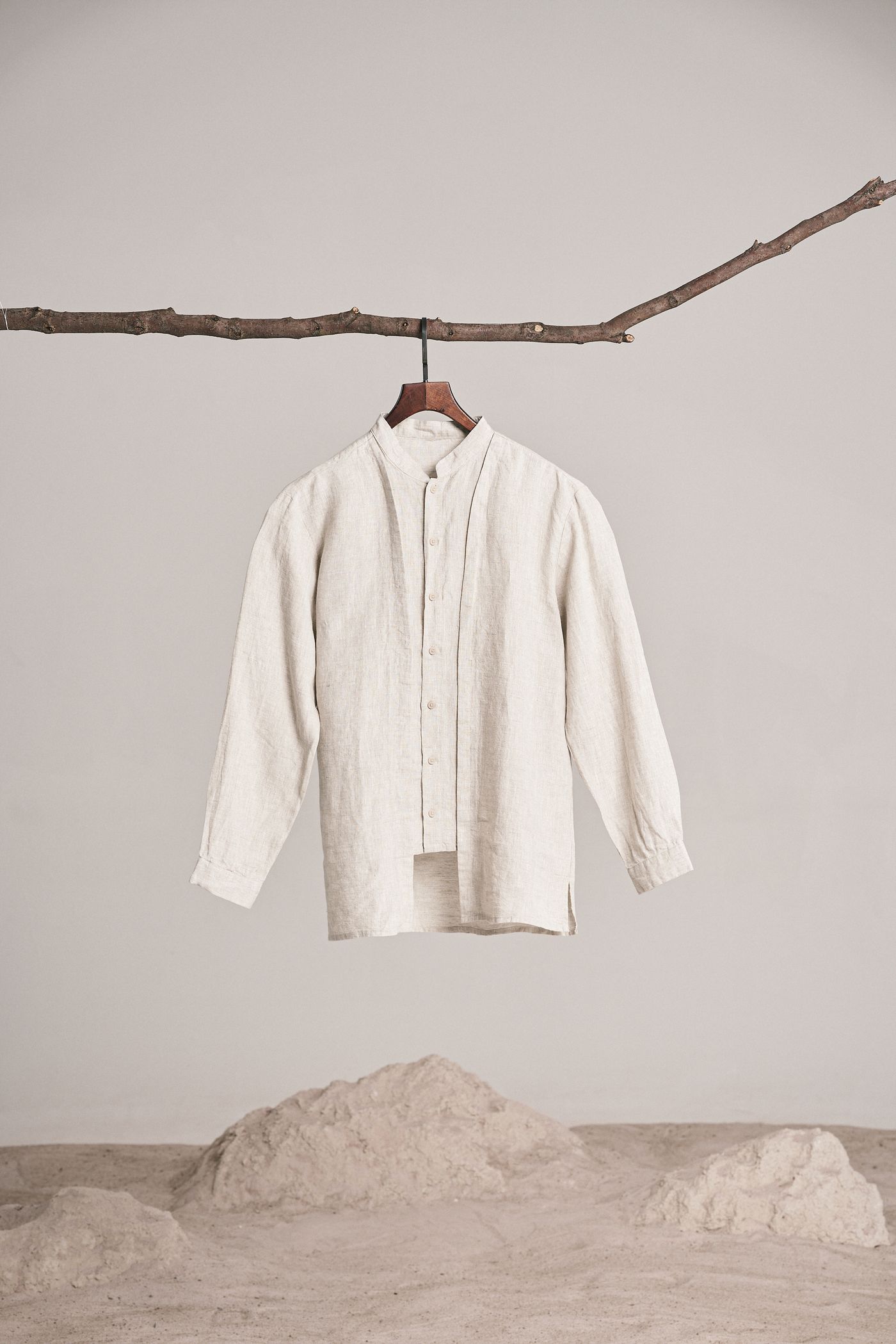
A minimalist garment presentation highlighting neutral color, clean construction and modern relaxed styling.
11. Balancing Oversized Volume
Oversized tops can be balanced through contrast. If the top has significant volume, a more controlled bottom can create a clear visual structure. Alternatively, an oversized top can be combined with wide trousers when the outfit intentionally embraces a relaxed silhouette.
Color can also provide balance. Monochromatic styling makes volume appear more deliberate, while contrasting colors emphasize the outline of each garment.
12. Long-Sleeve Tops as Wardrobe Multipliers
Long-sleeve tops can increase the number of outfits available from a relatively small collection. They work independently during mild temperatures and beneath jackets, coats and cardigans during colder periods.
A neutral long-sleeve top can also help transition summer pieces into cooler seasons. A short-sleeve dress, for example, may become more useful when combined with an appropriate fitted base layer.
A dependable women's long-sleeve basic top can therefore serve as a practical foundation for seasonal wardrobe planning.
13. Sleeve Design and Comfort
Sleeves should be evaluated according to movement, proportion and layering. A short sleeve creates a lighter visual effect, while a long sleeve provides more coverage and seasonal flexibility.
For layering, sleeve volume matters. A fitted long sleeve may work beneath a tailored blazer, while a wide sleeve may require a more relaxed outer layer.
Comfort should remain central. A beautiful top that restricts movement will usually have lower real-world wardrobe value.
14. V-Neck Blouses and Refined Proportions
The V-neck creates an open vertical direction that can work particularly well with tailored garments and layered jewelry. It provides a refined alternative to a crew neck while remaining relatively simple.
A V-neck blouse can be worn with wide-leg trousers, straight denim or a structured skirt. The same garment can therefore cover professional and smart-casual situations.
Accessories should complement rather than overwhelm the neckline. A small pendant can follow the shape naturally, while statement earrings can provide an alternative focal point.
A versatile women's V-neck blouse can become an important bridge between everyday and elevated dressing.
15. Button-Up Tops and Styling Flexibility
Button-up tops are valuable because they can be worn in several different ways. Fully closed, they look structured. Partially open, they become more relaxed. Open over a T-shirt, they can act as lightweight outer layers.
This flexibility makes them particularly useful for travel and capsule wardrobes. One shirt can participate in several outfit formulas without looking identical every time.
16. Satin and the Language of Polished Style
Satin has a naturally refined visual character because its surface interacts with light. It can create an elevated impression even when the design itself remains simple.
The strongest satin styling often involves contrast. A smooth satin blouse can be paired with matte trousers, denim or textured accessories. This combination prevents the outfit from appearing visually flat.
Satin pieces may require more careful care than basic cotton garments, so their maintenance requirements should be considered before purchase.
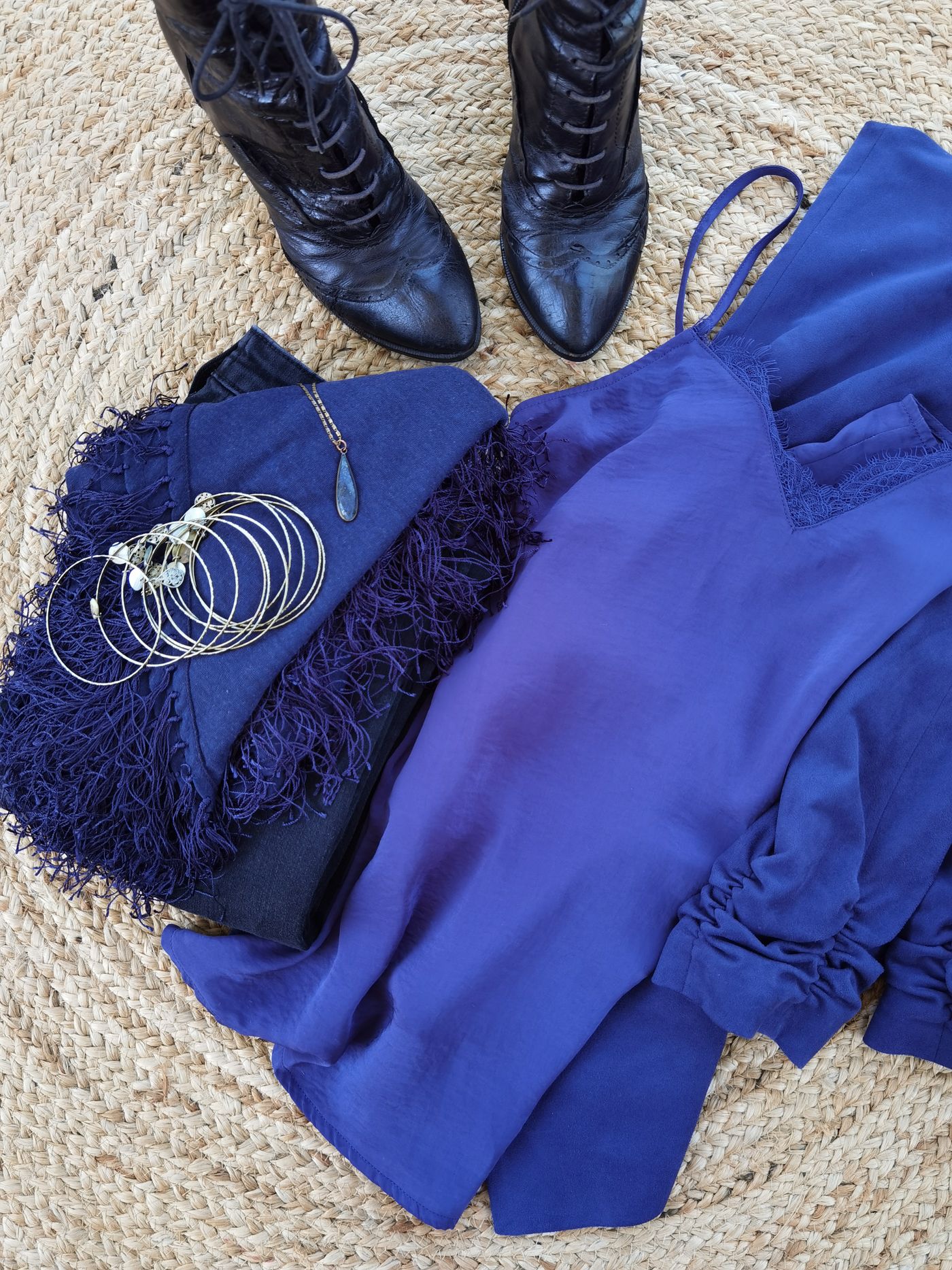
An elegant people-free fashion flat lay demonstrating silk texture, accessories and coordinated styling.
17. Styling a Satin Button-Up Blouse
A satin button-up can be styled in several directions. With tailored trousers, it creates a refined professional combination. With dark denim, it can become a sophisticated casual outfit. With a skirt and minimal accessories, it can transition naturally into evening dressing.
Because the fabric already creates visual interest, additional styling should remain controlled. Simple jewelry and structured accessories can support the garment without competing with it.
A polished satin button-up blouse can therefore serve as a versatile elevated piece rather than a garment reserved for one occasion.
18. Creating a Neutral Color Foundation
A wardrobe becomes easier to coordinate when several foundation colors repeat across different garments. Black, white, cream, gray, navy and beige can work across many outfit categories.
Neutral colors do not need to dominate the entire wardrobe. Their main function is to create compatibility. Once a neutral foundation is established, accent colors can be introduced with greater freedom.
19. Using Accent Colors Intentionally
Accent colors create personality and prevent a wardrobe from becoming visually repetitive. Muted blue, burgundy, soft green, dusty pink, terracotta and other controlled shades can work effectively when they connect with existing pieces.
The strongest accent colors are those that can be worn in more than one combination. A colorful top should not require an entirely separate set of accessories and bottoms.
20. Warm and Cool Color Relationships
Understanding warm and cool color relationships can simplify coordination. Warm neutrals such as cream, camel and brown can work naturally together, while gray, navy and cooler blues can create a different visual atmosphere.
There is no requirement to maintain a single temperature throughout a wardrobe. Controlled contrast can also create sophisticated results. The key is intentionality.
21. Professional Tops for the Modern Workplace
Professional tops should provide a combination of comfort, polish and appropriate structure. Blouses, clean crew necks, refined V-necks and fitted long-sleeve tops can all contribute to a professional wardrobe.
The appropriate level of formality depends on the environment. Some workplaces require traditional tailoring, while others permit polished smart-casual combinations.
A well-curated women's clothing collection can make it easier to build complementary professional outfits across different levels of formality.
22. Smart-Casual Styling Principles
Smart-casual styling works through contrast. A basic T-shirt can become more refined when combined with tailored trousers and a structured jacket. A blouse can become more relaxed when worn with denim.
This contrast increases wardrobe efficiency because the same garment can serve different purposes depending on its styling partners.
23. Denim as a Universal Partner
Denim is one of the easiest bottoms to combine with women's tops. A simple cotton top creates a relaxed outfit, while a refined blouse can elevate the same denim into a more sophisticated combination.
Dark denim often supports polished styling, while lighter washes tend to reinforce casual dressing. Straight-leg, wide-leg and slim silhouettes each create different proportion relationships with tops.
24. Tailored Trousers and Soft Tops
Tailored trousers introduce structure, making them particularly useful with softer fabrics. A cotton T-shirt tucked into tailored trousers creates a modern contrast, while a satin blouse produces a more polished direction.
When trousers are very wide, the top can provide definition through a tuck, shorter hem or more fitted silhouette. When trousers are narrow, a relaxed top can introduce balance.
25. Skirts and Top Proportion
Skirts create additional opportunities to experiment with proportion. A fitted ribbed top can balance a fuller skirt, while a tucked blouse can work with a structured midi silhouette.
For monochromatic outfits, differences in fabric become important. Satin, cotton, denim and ribbed textures can create visual separation even when the colors are closely related.
26. Blazers and Layered Tops
Blazers can immediately increase the perceived structure of a top. A basic T-shirt beneath a blazer creates a contemporary smart-casual look, while a blouse creates a more traditional professional combination.
Layering works best when the base garment does not create unnecessary bulk. Smooth and lightweight tops are particularly useful beneath fitted jackets.
27. Cardigans and Soft Layering
Cardigans provide a softer alternative to structured jackets. They work particularly well with cotton, ribbed and long-sleeve tops.
A fitted base layer beneath a relaxed cardigan creates a balanced relationship between volume and definition. Conversely, an oversized top may require a more structured cardigan to maintain visual control.
28. Overshirts as Modern Casual Layers
Overshirts are useful when a wardrobe needs additional casual layering. They can be worn open over a T-shirt or buttoned as a standalone top.
Neutral overshirts can work across seasons, while denim or textured fabrics can add a stronger casual identity.
29. Travel-Friendly Top Selection
Travel wardrobes benefit from tops that can create multiple outfits while occupying relatively little space. Lightweight fabrics, neutral colors and adaptable silhouettes can improve packing efficiency.
A small travel collection might include several everyday tops, one long-sleeve layer and one refined blouse. Accessories can then change the character of the outfits without requiring many additional garments.
30. Tops for Warm Weather
Warm-weather dressing places greater importance on fabric breathability, weight and airflow. Lightweight cotton and appropriate blends can provide practical options.
Loose silhouettes can increase comfort, while light colors can create a visually fresh summer appearance. However, color should always be selected according to personal preference and the rest of the wardrobe.
31. Tops for Cooler Weather
Cooler conditions increase the importance of layering. Long-sleeve basics, fitted ribbed tops and lightweight woven shirts can provide foundations beneath sweaters, jackets and coats.
Texture also becomes more important during cooler seasons. Ribbed fabric, knit textures and heavier woven materials can create visual depth.
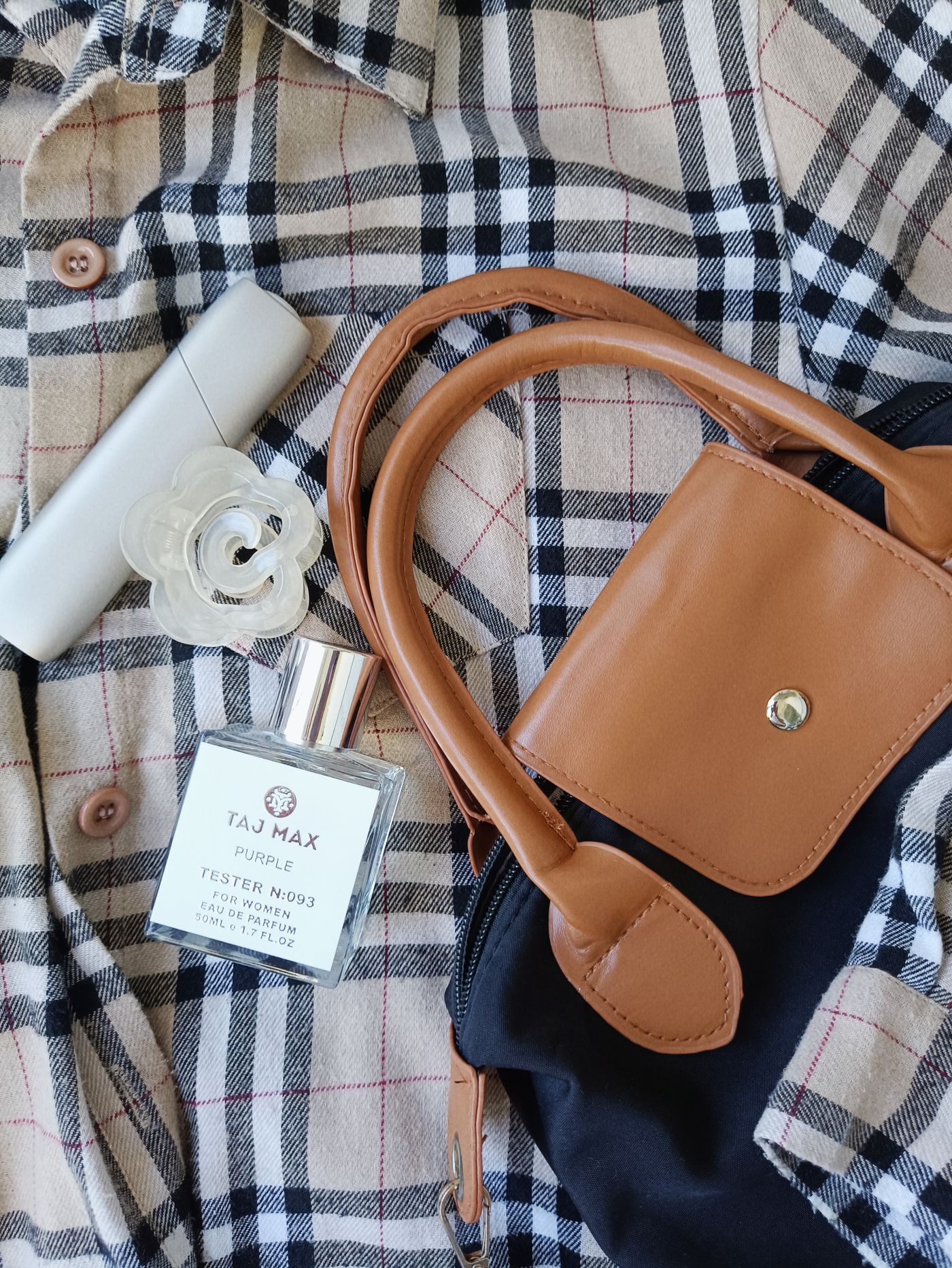
A people-free fashion composition combining a patterned shirt, accessories and neutral styling elements.
32. Transitional Season Layering
Transitional seasons require flexible garments because temperatures can vary significantly throughout the day. Lightweight long-sleeve tops, short-sleeve ribbed pieces and button-up shirts can all become useful transitional layers.
The best layering system allows garments to be removed easily without disrupting the rest of the outfit.
33. Monochromatic Outfit Construction
Monochromatic dressing uses a single color family to create visual continuity. It can make an outfit appear polished while simplifying the process of coordinating different garments.
Texture becomes essential in this approach. A smooth top combined with ribbed, woven or denim pieces can create contrast without requiring multiple colors.
34. Minimal Accessory Styling
Minimal accessories allow the quality and silhouette of a top to remain visible. A simple watch, small earrings, a refined bag or understated shoes can complete an outfit without overwhelming it.
This approach is especially useful with satin or patterned tops, where the garment itself already provides a visual focal point.
35. Statement Accessories With Basic Tops
Basic tops create an excellent background for stronger accessories. A simple white or black T-shirt can support a colorful handbag, statement necklace, distinctive footwear or bold earrings.
This is one of the reasons basic tops remain relevant even when fashion preferences evolve. Their simplicity allows the surrounding styling to change.
36. Matching Jewelry to Necklines
Jewelry can be selected according to neckline structure. Crew necks often work well with shorter necklaces or statement earrings. V-necks naturally support pendants, while collars may look best with minimal necklaces.
The goal is not to follow a strict rule but to maintain visual balance between the garment and the accessories.
37. Understanding Body Proportion
Different silhouettes interact differently with the body. Fitted tops can create definition, relaxed tops provide comfort and oversized tops emphasize volume.
The most useful approach is to consider the relationship between the top and bottom rather than focusing on the top alone. Wide trousers may benefit from a defined upper silhouette, while slim trousers can accommodate more volume above.
Personal comfort remains equally important. A garment should support natural movement and feel appropriate for real daily activities.
38. Shoulder Construction
The shoulder area strongly influences the overall appearance of a top. Structured shoulder seams can create definition, while dropped shoulders create a relaxed effect.
When buying fitted garments, inspect shoulder placement carefully. When selecting oversized garments, make sure the dropped shoulder appears deliberate and balanced.
39. Sleeve Opening and Movement
Sleeve openings should allow comfortable movement without excessive tightness. This is particularly important for fitted tops and garments made from fabrics with limited stretch.
Layering also affects sleeve design. A voluminous sleeve may work beautifully under an oversized coat but become uncomfortable beneath a fitted blazer.
40. Hem Length and Styling Flexibility
Hem length determines whether a top works best tucked, untucked or partially tucked. Longer tops can provide a relaxed appearance, while shorter hems often work naturally with high-waisted bottoms.
A versatile top should ideally offer more than one styling option. The ability to change the tuck or layering position can create noticeably different outfit proportions.
41. The Art of the Partial Tuck
The partial tuck is a simple styling technique that can introduce definition without creating a completely formal appearance. It works especially well with relaxed T-shirts and button-up shirts.
Lightweight fabrics usually make the technique easier, while thicker fabrics may create unnecessary bulk.
42. Building a Capsule Tops Collection
A capsule tops collection should be built around compatibility. The garments do not need to be identical, but their colors, fabrics and proportions should allow them to work together.
A practical collection can include classic T-shirts, a ribbed top, a long-sleeve basic, one or two blouses and an elevated button-up.
| Top Category | Main Function | Useful Pairings | Styling Character |
|---|---|---|---|
| Classic Cotton T-Shirt | Everyday foundation | Denim, trousers, skirts, blazers | Clean and versatile |
| Oversized Crew Neck | Relaxed volume | Straight denim, fitted bottoms | Modern casual |
| Ribbed Short Sleeve | Texture | Jeans, skirts, tailored trousers | Textured and flexible |
| Long-Sleeve Basic | Layering | Cardigans, jackets, coats | Practical and transitional |
| V-Neck Blouse | Refined dressing | Tailored trousers, denim, skirts | Polished |
| Satin Button-Up | Elevated styling | Tailoring, denim, evening bottoms | Elegant and sophisticated |
43. Lifestyle-Based Wardrobe Planning
Wardrobe planning should begin with real routines. Someone who spends most days in casual environments may need more cotton and ribbed tops, while someone working in a professional environment may require a larger selection of blouses and refined layers.
The wardrobe should reflect actual usage rather than an imaginary lifestyle. This prevents the accumulation of beautiful garments that remain unworn.
44. Avoiding Duplicate Purchases
Duplicate purchases are not always negative, particularly for frequently worn basics. However, repeated buying becomes inefficient when several pieces perform exactly the same role and rarely get used.
Before purchasing, identify what the new garment adds. It might provide a new neckline, color, fabric, season, silhouette or occasion.
45. The Three-Outfit Test
A practical way to evaluate a new top is to build three complete outfits using clothing already owned. If the garment works with denim, tailored trousers and a skirt, it has demonstrated useful versatility.
If it only works with one specific bottom or accessory, its role may be more specialized.
46. Inspecting Garment Construction
Construction details often reveal how carefully a garment has been made. Examine seams, hems, neckline finishing, buttons, cuffs and stitching.
For woven blouses, look for clean seam alignment. For knit tops, inspect elasticity and recovery. For button-up garments, examine whether buttons are securely attached and evenly positioned.
47. Caring for Cotton Tops
Cotton garments should be maintained according to their individual care instructions. Washing temperature, drying method and detergent choice can all affect fabric appearance over time.
Storage should also protect the shape of the garment. Some tops can be folded efficiently, while structured pieces may benefit from suitable hangers.
48. Caring for Ribbed Tops
Ribbed garments depend on their elasticity and surface structure. Excessive heat can affect stretch recovery, while rough washing can create unnecessary surface wear.
When drying, avoid pulling the garment into an unnatural shape. Allowing the fabric to retain its natural proportions can help preserve the original silhouette.
49. Caring for Satin Blouses
Satin requires additional care because its smooth surface can show friction, creasing and abrasion. Always follow the manufacturer's care instructions.
During storage, avoid placing satin beneath heavy garments or against rough surfaces. Appropriate handling helps preserve the smooth appearance of the fabric.
50. Developing a Consistent Color System
A consistent color system makes daily dressing more efficient. Select several foundation shades and then introduce accent colors that can be repeated throughout the wardrobe.
This does not mean every item needs to match. Instead, colors should have enough relationships to allow several complete outfits without extensive planning.
51. Texture as a Source of Visual Variety
Texture is particularly useful in wardrobes that rely heavily on neutral colors. Ribbed fabric, denim, satin, cotton, knitwear and woven materials can all create differentiation.
Using texture allows a wardrobe to remain relatively simple in color while still producing sophisticated visual combinations.
52. Patterned Tops and Wardrobe Compatibility
Patterns can introduce personality, but the most useful patterned tops often contain colors already present in the wardrobe.
Stripes, checks and subtle geometric patterns can work effectively with neutral bottoms. When the top is strongly patterned, simpler accessories can help maintain balance.
53. Evening Dressing With Simple Tops
An evening outfit does not always require an elaborate garment. A fitted basic top can become sophisticated when combined with tailored trousers, refined footwear and carefully chosen accessories.
A satin blouse can create a stronger focal point, while a simple cotton top can support a more understated evening aesthetic.
54. Weekend Outfit Planning
Weekend wardrobes often benefit from comfortable fabrics and relaxed silhouettes. Cotton T-shirts, oversized crew necks and ribbed tops can provide reliable foundations.
Adding one structured element, such as a tailored jacket, refined bag or clean footwear, can elevate a relaxed outfit without compromising comfort.
55. Business-Casual Top Combinations
Business-casual dressing allows more flexibility than formal professional clothing. A polished T-shirt can work beneath a blazer, while a blouse can be combined with dark denim when appropriate.
The level of formality should always reflect the specific environment. The same top can appear significantly different depending on the garments and accessories surrounding it.
56. One Blouse, Multiple Occasions
A versatile blouse can support several different situations. With jeans and simple footwear, it can work for daytime activities. With tailored trousers and refined accessories, it can become appropriate for professional or evening settings.
This ability to transition is one of the strongest reasons to invest in adaptable silhouettes rather than garments designed for only one event.
57. Minimalist Tops Collections
Minimalist wardrobes rely on clean lines, restrained colors and practical silhouettes. The objective is not to eliminate personality but to remove unnecessary complexity.
When the wardrobe is minimalist, garment quality becomes more visible. Fabric texture, fit, construction and finishing details become central to the overall appearance.
58. Expressive Tops Collections
An expressive wardrobe can use tops as focal points. Bold colors, distinctive textures, dramatic silhouettes and interesting patterns can create a stronger fashion identity.
The surrounding garments can remain relatively simple so that the statement top remains visually dominant.
59. Shopping With a Defined Purpose
Every new top should have a defined purpose. It may solve a seasonal need, replace a worn-out basic, provide a new professional option or introduce a useful color.
This approach transforms shopping from simple accumulation into intentional wardrobe development.
60. Organizing Tops Efficiently
Organization can improve how often garments are worn. Group tops by category, color or season so that frequently used pieces remain visible and accessible.
A well-organized wardrobe also makes gaps easier to identify. If a certain category is consistently missing, that becomes a clearer shopping priority.
61. Creating Repeatable Outfit Formulas
Outfit formulas make daily dressing faster. A classic T-shirt with straight denim, a ribbed top with wide-leg trousers, a blouse with tailored pants and a satin shirt with dark denim are all examples.
Once these formulas are established, different tops can be substituted into the same structure, creating variety without requiring a new styling concept every day.
62. Four Practical Outfit Formulas
Classic cotton T-shirt + straight denim + clean sneakers + structured bag.
Ribbed short-sleeve top + tailored trousers + minimal jewelry + refined footwear.
Long-sleeve basic + blazer + straight trousers + understated accessories.
Satin button-up + dark denim or tailored trousers + elegant shoes + simple jewelry.
63. Wardrobe Longevity
Longevity is influenced by both durability and continued usefulness. A garment may remain physically intact but become rarely worn if its silhouette does not work with the rest of the wardrobe.
The strongest pieces combine reasonable durability with repeated styling opportunities. This is why wardrobe compatibility is as important as construction quality.
64. Comfort and Everyday Wear
Comfort is an important part of wardrobe efficiency. Tops that restrict movement, irritate the skin or require constant adjustment are less likely to be worn frequently.
Before purchasing, consider how the garment will behave during sitting, walking, reaching and normal daily activity. Practical comfort often determines whether a garment becomes a genuine wardrobe favorite.
65. The Relationship Between Fit and Styling
Fit determines how successfully a top interacts with other garments. A fitted top can balance wide trousers, while a relaxed top may work better with streamlined bottoms.
Oversized silhouettes can also work with wide trousers when the look is intentionally proportioned. The important factor is not a universal rule but visual balance.
66. Building a Consistent Wardrobe Identity
A wardrobe can develop a recognizable identity through repeated choices. Consistent colors, similar silhouettes, recurring textures and carefully selected accessories can create a coherent visual language.
This makes shopping easier because new pieces can be evaluated against an established style framework.
67. Evaluating Women's Clothing Collections
When exploring women's clothing collections, focus on the characteristics of individual garments rather than relying solely on labels or trends. Compare fabrics, silhouettes, sizing, colors, construction and intended use.
A thoughtfully organized women's clothing selection can provide a useful starting point for identifying complementary wardrobe categories.
68. Professional Shopping Checklist
- Check the shoulder fit.
- Evaluate sleeve comfort.
- Inspect neckline construction.
- Consider fabric weight.
- Review care requirements.
- Check color compatibility.
- Consider the garment's intended occasions.
- Build at least three outfit combinations.
- Inspect seams and hems.
- Consider whether the garment fills a genuine wardrobe gap.
69. Functional Wardrobe Categories
A professional wardrobe becomes easier to understand when garments are organized by function. Everyday foundations provide reliability, textured tops add variety, layering pieces improve seasonal flexibility and refined tops create options for professional or social occasions.
This functional system prevents the wardrobe from becoming dominated by one category.
70. Everyday Foundation Tops
Foundation tops should be comfortable, practical and easy to combine. Cotton T-shirts and simple crew necks are natural examples.
Neutral colors increase their usefulness because they can support different jackets, bottoms and accessories.
71. Texture-Focused Tops
Ribbed tops can introduce texture while remaining easy to style. They are particularly effective when the rest of the outfit uses simple colors and silhouettes.
Texture creates interest without requiring strong prints, making these tops useful in minimalist wardrobes.
72. Refined Blouses
Refined blouses provide a polished option for professional and social environments. V-necks, button-ups and structured woven styles can all contribute to this category.
Their versatility increases when they can also be worn casually with denim.
73. Layering Foundations
Layering tops should be comfortable beneath other garments. Long-sleeve basics and lightweight fitted styles often perform well in this role.
Neutral colors are especially useful because the neckline and sleeves may remain visible beneath the outer layer.
74. Six-Category Tops Blueprint
| Category | Core Purpose | Recommended Colors | Styling Direction |
|---|---|---|---|
| Classic T-Shirts | Daily foundation | White, black, cream, gray | Casual and smart-casual |
| Oversized Crew Necks | Relaxed volume | Neutral and muted shades | Modern casual |
| Ribbed Tops | Texture | Neutral and soft accents | Casual and transitional |
| Long-Sleeve Basics | Layering | Black, cream, gray, navy | Seasonal flexibility |
| V-Neck Blouses | Professional polish | White, ivory, navy, muted colors | Office and refined casual |
| Satin Button-Ups | Elevated styling | Black, champagne, brown, jewel tones | Evening and sophisticated casual |
75. Wardrobe Review Process
A wardrobe review should focus on usage rather than emotion alone. Identify which tops are worn frequently, which garments require constant adjustment and which pieces remain unused.
Frequently worn garments should be maintained carefully. Rarely worn pieces should be evaluated according to whether they serve a specific purpose or simply occupy space.
76. Replacing Worn Essentials
Replacing worn basics is often more useful than continuously adding new statement pieces. A stretched neckline, damaged hem or faded fabric can reduce the overall polish of everyday outfits.
Maintaining a small replacement list can make shopping more intentional and prevent last-minute purchases.
77. Creating Seasonal Rotation
Seasonal rotation allows the same wardrobe to remain useful throughout the year. Lightweight tops can become base layers in cooler conditions, while long-sleeve pieces can move into independent use during transitional weather.
Rotation also reduces wardrobe clutter and makes the currently relevant pieces easier to access.
78. Building Around Existing Bottoms
Many shoppers focus on tops first, but bottoms can provide valuable information about what tops are actually needed. Review existing jeans, trousers and skirts before purchasing another top.
If most bottoms are wide-leg, fitted and tucked tops may increase styling options. If the wardrobe is dominated by slim trousers, relaxed tops may provide more variety.
79. Building Around Existing Accessories
Accessories can also influence top selection. A wardrobe with many statement bags may benefit from simpler tops, while a minimalist accessory collection may allow more expressive tops to become focal points.
This demonstrates the importance of considering the entire outfit ecosystem rather than purchasing garments independently.
80. Long-Term Women's Tops Wardrobe Strategy
A successful women's tops wardrobe combines practicality, variety, comfort and visual coherence. Classic cotton tops provide reliable foundations. Ribbed pieces introduce texture. Long-sleeve basics improve layering. V-neck blouses create refined options, while satin button-ups add an elevated dimension.
The strongest strategy is to evaluate every garment according to its role in the broader wardrobe. Fit, fabric, color, maintenance, comfort and styling flexibility should all be considered together.
When these principles are applied consistently, a relatively focused collection can support casual dressing, professional environments, travel, seasonal transitions, weekend outfits and evening styling without becoming unnecessarily complicated.
81. FAQ: Women's Tops Wardrobe Strategy
What are the most versatile women's tops?
Classic cotton T-shirts, ribbed tops, long-sleeve basics, V-neck blouses and adaptable button-up shirts can support many different outfits and occasions.
How many tops should a wardrobe contain?
There is no universal number. The appropriate quantity depends on lifestyle, climate, work environment, laundry frequency and personal preferences.
Why are cotton T-shirts wardrobe essentials?
They are generally easy to style, comfortable for everyday use and compatible with denim, trousers, skirts and multiple layers.
How can an oversized top look polished?
Balance the volume with the lower half of the outfit, use a partial tuck when appropriate and introduce structured accessories or outerwear.
What makes a blouse suitable for professional dressing?
Appropriate fit, clean construction, suitable fabric, controlled proportions and coordination with professional bottoms can all contribute to a polished appearance.
Can satin blouses be worn casually?
Yes. Pairing satin with denim and understated accessories can create a more relaxed interpretation of an otherwise elevated garment.
What is the advantage of ribbed tops?
They provide texture and subtle visual interest while maintaining relatively simple silhouettes that can work alone or underneath layers.
Which neckline is easiest to style?
Crew and V-neck designs are both adaptable. The best choice depends on personal preference, proportions and the intended styling direction.
How can I make a basic T-shirt look more sophisticated?
Pair it with tailored trousers, a structured blazer, refined footwear, an elegant bag or carefully selected jewelry.
How should I choose colors for a tops collection?
Start with several compatible neutral shades and then add accent colors that can coordinate with multiple existing wardrobe pieces.
How do I test whether a top is versatile?
Create at least three complete outfits with pieces already owned. Multiple successful combinations usually indicate stronger wardrobe utility.
What should I inspect before buying a blouse?
Check the shoulders, sleeves, neckline, buttons, seams, fabric quality, care requirements and compatibility with existing bottoms.
Are long-sleeve tops useful all year?
Lightweight long-sleeve tops can be worn alone during mild weather and used as base layers when temperatures fall.
How can I avoid buying duplicate tops?
Define the purpose of every purchase and determine whether it adds a new color, silhouette, fabric, season or occasion.
How should satin tops be stored?
Protect them from rough surfaces, excessive compression and unnecessary friction, while following the specific care instructions provided with the garment.
Can one top work for different occasions?
Yes. Changing the bottoms, footwear, outer layer and accessories can significantly alter the formality and visual character of the same top.
What makes a top useful for travel?
Lightweight construction, easy coordination, comfort, layering ability and the capacity to create several outfits are valuable characteristics.
Should every wardrobe include statement tops?
Statement tops can add personality, while versatile basics provide the foundation needed to style them effectively.
Why are neutral tops useful?
Neutral shades can coordinate with many colors and patterns, making them useful foundations for compact and flexible wardrobes.
How can a small tops collection feel varied?
Combine different necklines, fabrics, textures, sleeve lengths and silhouettes while maintaining a coherent color system.
82. Final Professional Wardrobe Checklist
- Maintain several dependable everyday tops.
- Include at least one textured option.
- Keep useful long-sleeve layering pieces.
- Maintain several refined blouses.
- Include an elevated button-up when appropriate for the lifestyle.
- Use a consistent neutral foundation.
- Add accent colors intentionally.
- Check fit before purchasing.
- Inspect fabric and construction.
- Consider maintenance requirements.
- Test every new top with existing wardrobe pieces.
- Replace worn essentials before unnecessary additions.
- Rotate seasonal garments thoughtfully.
- Build repeatable outfit formulas.
- Prioritize garments that support multiple real-life occasions.
83. Building a More Efficient Fashion System
The modern wardrobe works best when individual pieces communicate with one another. A classic T-shirt can provide the foundation, a ribbed top can introduce texture, a long-sleeve piece can provide seasonal flexibility and a refined blouse can create a more polished direction.
This system allows the wearer to change the mood of an outfit without constantly changing the underlying wardrobe. The same trousers can look casual with a cotton T-shirt, refined with a blouse and more elevated with a satin button-up.
84. The Value of Strategic Fashion Investment
Strategic fashion investment does not necessarily mean purchasing expensive clothing. It means directing attention toward garments that provide meaningful long-term utility.
A well-constructed basic that can be worn repeatedly may provide more practical value than a highly specialized garment that works for one occasion. Likewise, a versatile blouse that can transition between professional and social settings can reduce the need for several separate pieces.
85. The Complete Tops Wardrobe Blueprint
A complete women's tops wardrobe should combine dependable foundations, modern proportions, useful textures, seasonal layers and elevated pieces. The most effective collection is one that reflects the wearer's real lifestyle while providing enough variety to prevent repetitive dressing.
Start with reliable basics, establish a coherent color palette, introduce ribbed and textured pieces, add long-sleeve layers and then develop a selection of refined blouses. From there, use accessories, footwear and outerwear to create different levels of formality.
The result is a professional wardrobe system in which every top has a purpose and every purchase contributes to greater styling flexibility, easier daily dressing and a more coherent personal fashion identity.
This was a useful read for understanding some of the common terms used around cricket accounts. I came across khelo 24 while looking into the subject, and the related Cricket ID articles provide additional background.
ReplyDelete